Brooklyn Museum Announces “Pay What We Wish” Admissions

The policy is the museum’s newest attempt to shift its financial burden onto its lowest-ranking staff and the public.
The policy is the museum’s newest attempt to shift its financial burden onto its lowest-ranking staff and the public.

The painting depicts a handsome figure with thickset brows and the Latin words “Mora, Negare, Deponere” (“Delay, Deny, Depose.”)

The show invites participants to fall in love with a work of art without ever seeing it.
Black paints are an essential part of many artists’ toolkits, but why are some more black than others? This article examines the multiple factors that determine how deep black oil, acrylic, and watercolour paints appear, and offers some tips for increasing their intensity in your painting. The Science Behind Black Paints What Makes a Black Paint Black? The colour black is produced by the absence of reflected light. Visible light is a spectrum of electromagnetic waves, and what we recognise as different colours are really different wavelengths that move at different frequencies. Paint contains pigments that selectively absorb and reflect different wavelengths of light. For example, blue pigments absorb light in the red, orange, and yellow portion of the spectrum and reflect blue. Black pigments absorb most of the light that falls on them. In the absence of reflected light, our eyes perceive them as black. What is the Blackest Paint? Many black artist paints are made using carbon-based pigments, like Lamp or Bone Black, which have been used since prehistory. Others are made with inorganic pigments like Mars Black, a synthetically produced iron oxide. In recent years new, cutting-edge black coatings have been developed. …
The post The Science Behind Black Paints appeared first on Jackson’s Art Blog.

The 12th edition of Art Basel Hong Kong wrapped up on Sunday, March 30th, following five buzzy days that drew enthusiastic crowds to the Hong Kong Convention and Exhibition Centre. The event featured 240 galleries from 42 countries and welcomed a total of 91,000 attendees across the course of the fair, well above the 75,000 figure reported for last year’s edition.
This year’s Hong Kong Art Week—which included additional fairs such as Supper Club and a series of tentpole sales at major auction houses—got underway at a cautious moment for the city and its art market, a fact noted by those in attendance.

“Going into this year’s Art Basel Hong Kong, there was definitely a sense of uncertainty,” local gallerist Pearl Lam told Artsy. “The past few years have brought shifts in the market, and we weren’t sure how collectors, especially those who have been more cautious, would respond.” However, Lam noted that the week offered a “reassuring sign that confidence is returning.”
“The strong gallery participation, institutional support, and serious engagement from collectors all point to Hong Kong reaffirming its position as a vital art hub,” she added. “While it’s not without its challenges, the fair proved it’s an important step in restoring momentum.”
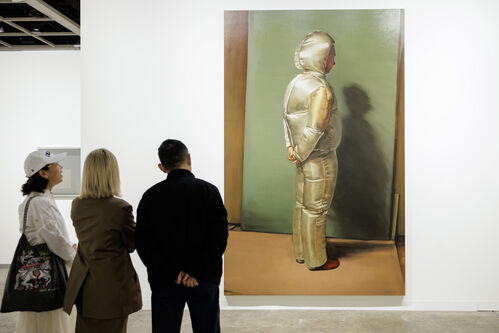
This sentiment was evident in robust deal-making across the fair, particularly by blue-chip galleries. Leading the sales was a $3.5 million Yayoi Kusama work titled INFINITY-NETS [ORUPX] (2013), sold by David Zwirner (all prices and sales are listed in U.S. dollars unless otherwise stated). While blue-chip exhibitors secured several seven-figure sales, the overall pace of transactions was more measured, reflecting the mood of the region’s emerging collector base.
“In general, collectors in Asia are increasingly likely to conduct thorough research before committing to a purchase, as the collectors build a greater understanding of the art market and value making informed decisions,” Angelle Siyang-Le, the director of Art Basel Hong Kong, told Artsy. “While there are always strong sales at the outset, we also see visitors who join us on VIP day return several times throughout the week. Collectors from Hong Kong, mainland China, and across the Asia Pacific region aren’t just interested in acquiring works—they want to build long-term relationships with galleries and develop a deeper understanding of the artists they encounter. It’s a nuanced approach to collecting, one that values education and connection.”
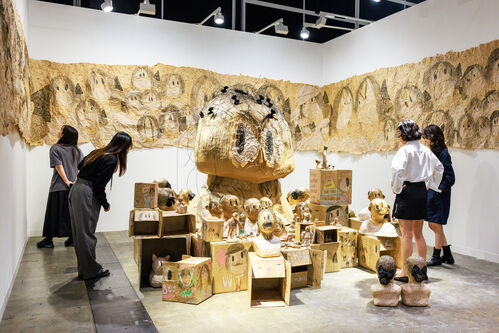
Another key development, noted Siyang-Lee, is the emergence of a new generation of collectors who “tend to be open-minded as they explore different artists, especially when it comes to mediums—from digital and sculptural works to the more ephemeral and unconventional.” This was evident in the popularity of Art Basel’s Discoveries section, which spotlights emerging galleries and artists, as well as in a series of standout booths across the fair that highlighted innovative names.
Also notable was the inaugural MGM Discoveries Art Prize, which was awarded to Shin Min and P21, the Seoul-based gallery that represents her. Min’s installation Ew! There is hair in the food! (2025) drew visitors throughout the fair. The artist and her gallery received a $50,000 cash prize and the opportunity to exhibit in Macau.
Here, we round up the key sales reported by galleries at Art Basel Hong Kong 2025.
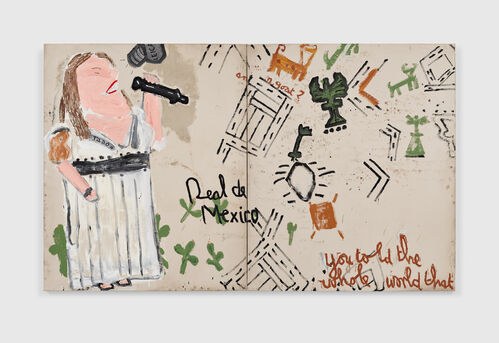
Mexican Singer, 2023
Rose Wylie
David Zwirner
Other than the Kusama sale, David Zwirner’s leading reported sale was Michaël Borremans’s Bob (2025), which sold for $1.6 million to the Corridor Foundation in Shenzhen, China. Other reported sales included:
Hauser & Wirth’s reported sales were led by Louise Bourgeois’s Cove (1988/2010), which sold for $2 million. Other reported sales included:
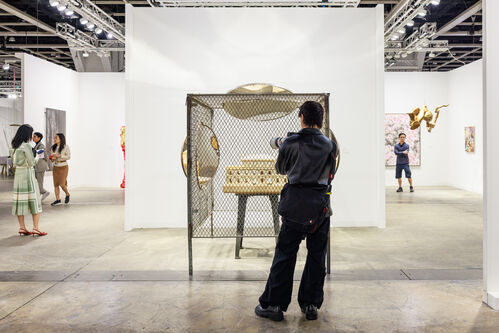
White Cube’s reported sales were led by Georg Baselitz’s Hannoversche Treue (2010), which sold for €1.75 million ($1.83 million). Other reported sales included:
The top sale reported by Thaddaeus Ropac was Roy Lichtenstein’s Water Lily Pond with Reflections (1992), which sold for $1.5 million. Other reported sales included:
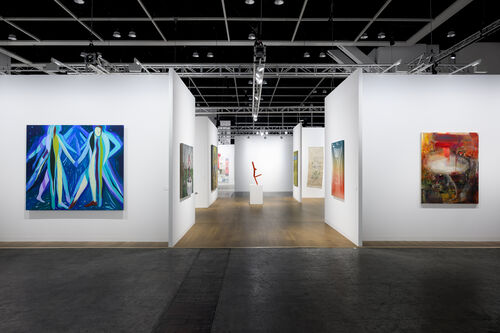
Perrotin’s reported sales were led by Takashi Marukami’s Tan Tan Bo: Wormhole (2025), which sold for $1.35 million. Other reported sales included:
Pace Gallery’s sales were led by a painting by Lee Ufan, which sold for $1.1 million on the final day of the fair. The gallery also sold Ufan’s With Winds (1991) for $950,000. Other reported sales included:
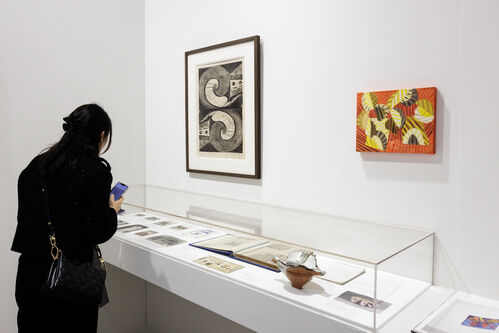
Galerie Lelong & Co. sold a work by David Hockney for €750,000 ($811,460), as well as a work by Jaume Plensa for €470,000 ($508,000).
Xavier Hufkens’s sales were led by a Milton Avery painting, which sold for $800,000. Other reported sales included:
David Kordansky Gallery’s reported sales were led by Jonas Wood’s Poppies 1, Poppies 3, Poppies 4 (2024), which sold for $650,000. Other reported sales included:
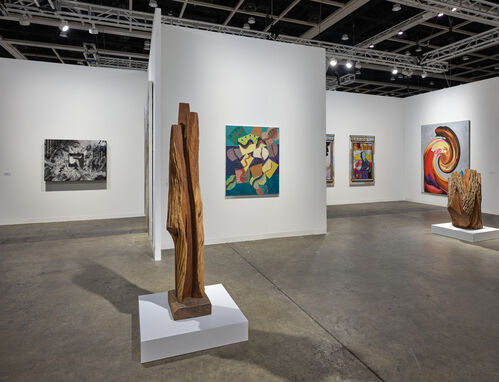
Seoul’s Kukje Gallery reported Park Seo-Bo’s Écriture No. 040516 (2004), which sold for a price in the range of $540,000–$648,000, as its top sale. Other reported sales included:
MASSIMODECARLO’s reported sales were led by Jennifer Guidi’s Seeking Joy (Painted Universe Mandala SF #4E, White Yellow Orange Pink Gradient, Natural Ground (2021), which sold for a price in the range of $500,000–$600,000. Other reported sales included:
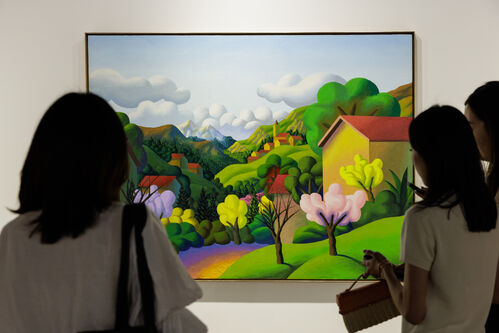
Kasmin’s reported sales were led by Ali Banisadr’s Omen (2025), which sold for $475,000. Other reported sales from the gallery included:
Tina Kim Gallery’s sales were led by Pacita Abad’s Through the Looking Glass (1996), which sold for $500,000 to a museum in Southeast Asia. This work was part of the gallery’s presentation in Encounters, a section of the fair dedicated to large-scale installations. The gallery’s second-most-expensive reported sale was for Abad’s The Far Side of Apo Island (1989), which sold for a price in the range of $250,000–$500,000. Other reported sales included:
Lehmann Maupin’s sales were led by a work by Cecilia Vicuña that sold for a price in the range of $350,000–$450,000. The gallery also sold a work by David Salle for $120,000, along with a work by Anna Park—whom the gallery announced representation of this week—for a price in the range of $40,000–$50,000.
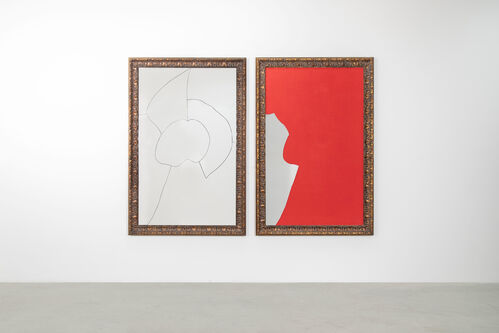
Color and Light, 2016
Michelangelo Pistoletto
GALLERIA CONTINUA
Galleria Continua’s reported sales were led by two works from Michelangelo Pistoletto’s “Color and Light” series, each selling for €320,000 ($346,000). Other reported sales from the gallery included:
Berry Campbell Gallery’s sales were led by Lynne Drexler’s Grass Fugue (1966), which sold for $750,000. The gallery also sold Drexler’s Bubbled Pink (1973) for $300,000. Other reported sales included:
Mazzoleni’s reported sales were led by Salvo’s La Valle (2002), which sold for $300,000. The gallery also sold two more paintings by the artist: Sant’Anna (2008) and Primavera (2006) for $100,000 and $75,000, respectively.
Almine Rech’s reported sales were led by a Javier Calleja painting, which sold for a price in the range of €250,000–€270,000 ($270,488–$292,127). Other reported sales included:
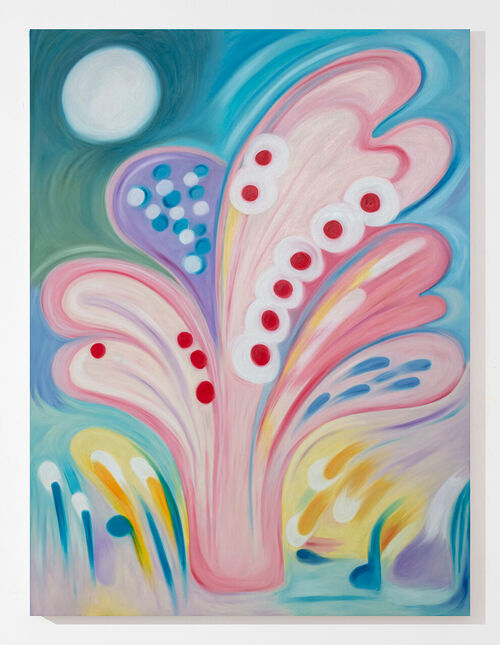
One Who Lives In the Dream, 2025
Hayal Pozanti
Jessica Silverman
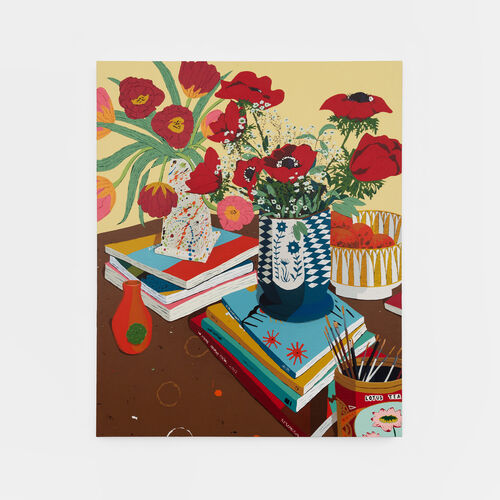
Two Vases, 2025
Hilary Pecis
Timothy Taylor
Timothy Taylor’s reported sales were led by Annie Morris’s Stack 8, Cobalt Turquoise Dark (2024), which sold for £170,000 ($219,800). Other reported sales included:
San Francisco dealer Jessica Silverman’s reported sales were led by Clare Rojas’s Sunset (2025), which sold for $110,000. Other sales reported by the gallery included:
Seoul’s Hakgojae Gallery reported sales were led by Jiang Heng’s Sick Like a Limpet (2017), which sold for $109,500. Other reported sales included:
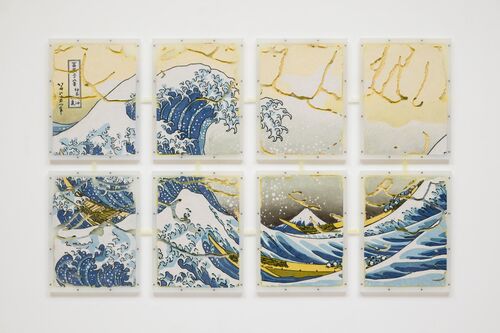
Study for Japanese Art – Hokusai, 2019-2021
Yukinori Yanagi
BLUM
BLUM’s sales were led by Yinkori Yanagi’s Study for Japanese Art – Hokusai (2019–21), which sold for $90,000. Other sales reported included:
Beijing’s Ink Studio reported sales that were led by Bingyi’s The Palatial Gardens and Flowers (2021–23), which sold for $75,000. Other reported sales included:
Sprüth Magers’s reported sales were led by Hyun-Sook Song’s 6 Brushstrokes over 1 Brushtroke (2025) and 9 Brushstroke I (2023), which sold for €65,000 ($70,326) apiece. The gallery also sold two works by Mire Lee, including Open wound: Skin sculpture studio prototype #7 (2024) and Open wound: Surface with many holes #3 (2024) for €45,000 ($48,680) and €30,000 ($32,450), respectively.
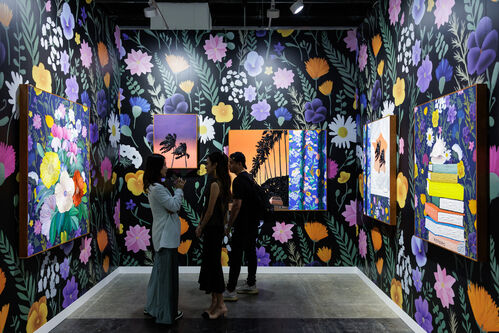
Anat Ebgi, one of Artsy’s best booths from the fair, reported sales led by a painting by Jenny Morgan, which sold for $55,000. Other reported sales included:
Mai 36 Galerie sold Magnus Plessen’s Doppelportrait Sarah und ich (blau) (2024) for $45,000. Other reported sales included:
Vadehra Art Gallery’s sales were led by Praneet Soi’s Falling Figure (2024–25), which sold for $30,000. Other sales reported by the gallery included:
The Jullian Full Black French Easel is a lightweight, full size easel, made of varnished black pine wood. Weighing just 4 kgs, this lightweight easel can be used indoors or easily transported outdoors with the black linen carrying bag that comes with the easel. In this Artist Review of the Month, Phoebe Raghunath shares how this affordable easel has helped her engage with her oil painting practice. Artist Review of Jullian Full Black Pine Wood French Easel by Phoebe Raghunath I have recently completed an online course with a wonderful plein air artist called Jill Steinhuis. She made a list of some essential materials for trying out plein air painting. Her easel is an aluminium one, but this was unaffordable for me so I searched for something similar but within a certain budget. Whilst looking for materials I came across Jackson’s website and they had the Jullian Full Black French Easel in pine with a carrying bag. What drew me to this easel is its lightweight design and the removable drawer that doubles as a platform for my large acrylic palette where I mix my paint. The drawer also allows me to be hands-free, …
The post Artist Review of Jullian Full Black Pine Wood French Easel appeared first on Jackson’s Art Blog.
 “To have something be uncanny, you must first introduce the familiar,” says Lizzie Gill.
Do stories and artists like this matter to you? Become a Colossal Member today and support independent arts publishing for as little as $7 per month. The article Flowers Entwine Porcelain Animals and Objects in Lizzie Gill’s Surreal Tablescapes appeared first on Colossal.