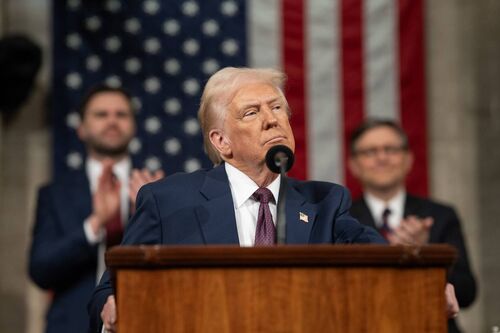
It’s barely been three months since Donald Trump returned to the presidency in the United States, but the impact of his administration has been swift. In the art market, this has been felt most significantly in terms of tariffs—taxes imposed on imported goods—which are looming over a number of countries that are the U.S.’s trading partners. Both the collectors and galleries in such countries, like Canada and Mexico, are being affected.
Some international galleries are reconsidering their plans to attend U.S. art fairs due to increased costs. Meanwhile, galleries based in the U.S. are weighing up the difficulties of showing and selling work by artists whose practices are based in those affected countries.
The impact of these tariffs amid the cross-border flow and exchange of artworks—such a crucial facet of the modern, international art world—is creating confusion among both galleries and collectors. Many are unsure of whether their usual practices of shipping and sales will incur extra costs.
Here, we explain in simple terms what tariffs are and what art collectors need to know about recent developments.
What are tariffs?
A key plank of President Trump’s economic agenda, tariffs are taxes placed on goods imported to the U.S. Tariffs are usually calculated as a percentage and are paid to the government: For instance, if the U.S. placed a 20% tariff on a British product worth $10, importing it to the country would incur an additional $2 charge. Importers can choose to pass these costs onto the consumer or to absorb them, affecting their bottom line.
For Trump, tariffs are a way of growing the U.S. economy by protecting domestic jobs and industries. They are also, in his view, a tool for reducing the deficit between how much the U.S. imports and exports from other countries.
Trump has already introduced several tariff measures on goods imported from some of the U.S.’s largest trading partners, significantly raising the prices of some items almost overnight. While these measures are not targeted specifically at the art market, the industry is one of many to be affected. “Each morning, I read the news to check for any changes to tariff policies, as the uncertainty surrounding them is impacting my clients,” said art advisor Adam Green.
This is a fast-moving, fluctuating situation. Countries affected by tariffs are proposing—or in some cases enacting—retaliatory measures, while Trump has threatened additional levies on other goods and countries. The U.S. stock market, meanwhile, has experienced a sustained slide as tariffs have increased ambiguity for businesses, investors, and consumers: On March 10th, the U.S. stock market lost $4 trillion in value following the unease over tariffs.
Which countries have been affected by the tariffs?
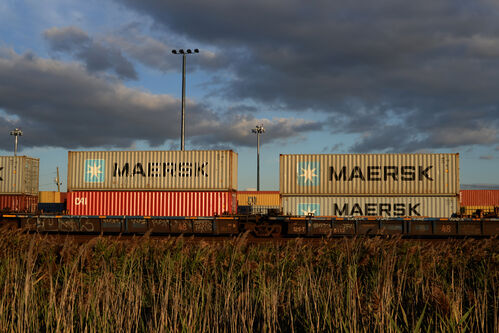
Three Stars, 2015
Joan Lemler
Soho Photo Gallery
As of the end of March, Trump has imposed a blanket 25% tariff on all steel and aluminum imported to the U.S., no matter the exporter. He has also enacted the following:
- Canada: A blanket 25% tariff has been imposed on all goods imported from Canada to the U.S., though a one-month exemption is currently in place until April 2nd on goods covered by the USMCA trade agreement, which includes artworks. Canada has imposed a set of retaliatory tariffs of 25% on some U.S. goods including “paintings, drawings and pastels, executed entirely by hand.”
- Mexico: A blanket 25% tariff has also been imposed on all goods imported from Mexico to the U.S. Like the Canadian tariffs, a one-month exemption is currently in place until April 2nd that covers artworks. Mexico has vowed to retaliate with its own set of tariffs, though the details have not yet been announced.
- China: A blanket tariff of 20% has been imposed on goods imported from China and Hong Kong, although there is currently an exemption on artworks. China has announced some retaliatory measures, including on agricultural products. Art is not understood to be affected.
- European Union: Trump has threatened to enact 25% tariffs on all imports from the 26-country bloc, but this has yet to materialize.
How are the tariffs affecting the art market?
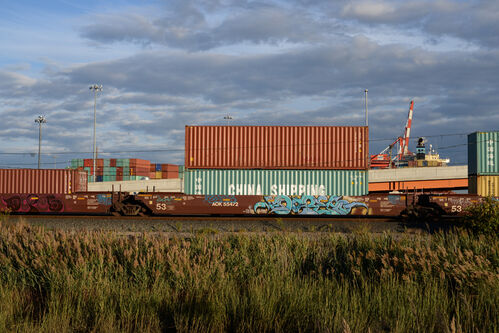
Containers and Ship, 2015
Joan Lemler
Soho Photo Gallery
These proposed measures have had an immediate effect on art market sentiment, particularly for galleries based in Canada and Mexico, where the cost of artwork has the potential to rise by 25% overnight.
“The immediate effects that we’ve seen following the tariffs have been that of fear both on our part and on that of the collectors,” said Matteo Sormani, CEO and founder of Art Preview, a gallery with branches in Mexico City and Miami. “These new logics draw a new scenario for the art market—especially with regards to the United States, a fundamental market for my gallery.”
In addition to the cost of importing artworks, tariffs could also increase the cost of international travel and materials for galleries and artists. This affects countries like China, where artworks are not directly affected, but other materials such as plaster and aluminum are. “We are starting to see the impacts of the tariffs on imported lumber and packing materials, which will result in an increase in packing and shipping costs,” said Francis Petit, a director at Gander & White, a fine art logistics company that works on projects including art fairs such as Frieze London and Art Basel.
For a wide range of galleries, the tariffs and retaliatory measures could skyrocket the cost of participating in art fairs—which is already an expensive endeavor. According to the Art Dealers Association of Canada, for instance, “roughly” 76 Canadian art dealers participated in 28 U.S.-based art fairs in 2024, and 14 U.S. dealers participated in Canada’s two major art fairs. “It is a major concern for our members as our economy is closely tied to the United States of America,” read a statement from the Association. “The art market is a fragile ecosystem. Any change can cause unforeseen consequences with a rippling impact across our sector.”
While negotiations are, with all affected countries, a continuing process, the issue is taking a toll. “Let’s be real, the market has slowed a bit,” said Blake Zigrossi, owner of Toronto-based Abbozzo Gallery. “We’ve also seen a lot of Canadian galleries postponing or changing plans for American projects and art fairs, as well as postponing the imports of American-made artwork until this is resolved.”
How should art collectors react?
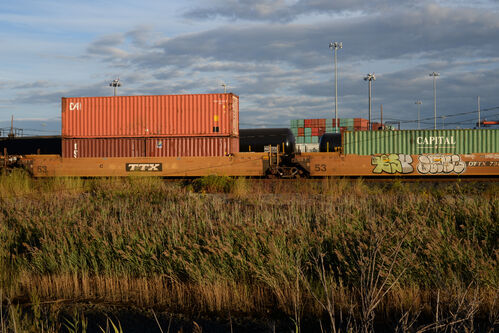
Capital, 2015
Joan Lemler
Soho Photo Gallery
Across conversations with art market professionals both on and off the record, several themes emerged when it came to how collectors should react to the tariffs.
First and foremost, experts say to act quickly on purchasing decisions now, while exemptions are still in place. “For our American collectors, to be blunt, buy now,” said Zigrossi. “We don’t know how long these threats and actions will last after they are implemented, so if there’s an artwork you’ve had an eye on, best beat the buzzer.”
This also applies to artworks that have already been purchased and might, for example, be awaiting shipping or other logistical matters. “I am advising clients that any international purchase carries a small but real risk of unexpected policy changes that could result in tariffs,” said Green. “To mitigate this, I recommend they make payments immediately and arrange shipping without delay.”
Tariffs are also not set in stone for perpetuity. For instance, Trump imposed a 15% tariff on Chinese artworks during his first presidency in 2019, and this was reduced to 7.5% after negotiations. It has also been mooted that the newly proposed tariffs may not fully materialize. “[We are] reassuring customers and explaining that the American president often uses the communication of duties for his immediate advantage and does not actually carry out what he says,” said Sormani.
Due to this volatility, some experts advise purchasing artworks that can be shipped later in cases where costs reach a prohibitive level. “If you see an artwork in any given exhibition throughout this tariff situation, you can always purchase the artwork and have your gallerist store it safely for the time being, and export later,” noted Zigrossi.
Amid the short-term difficulties, it’s perhaps most important for collectors to look at the bigger picture. In recent years, the art market has adapted to COVID-19 lockdowns and a sustained economic slowdown. Tariffs, while undoubtedly a bump in the road, should not be a deterrent if collectors ask the right questions of the galleries that they are working with.
“Even in uncertain times there are still opportunities, especially for collectors and investors with a long-term view,” said Petit. “There are so many works to see and buy, and when the market is softer, it could be a timely moment to seize opportunities that may arise despite economic challenges.”